
Facial cupping is a therapeutic technique in which small suction cups glide across the skin of the face to help move lymph and stimulate the circulation of blood and Qi (vital energy in Chinese Medicine).
Body cupping has been used for thousands of years in Chinese Medicine to help relieve muscle tension, support circulation and immune function, and promote overall health and well-being. With traditional cupping, a brief flame is introduced into the cup to create suction. The cup is then placed on the skin, gently lifting the skin and underlying tissue. The ancients used materials such as bamboo and animal horns to create their cups.
From a Chinese Medicine perspective, the suction on the skin helps bring stagnation - where Qi and blood are not moving freely - to the surface, where it can be more easily moved and cleared. Stagnation is considered one of the underlying patterns that can contribute to pain, tension, and imbalance in Chinese Medicine.
Facial cupping is a more modern practice, using materials such as glass and silicone cups. Facial cupping uses the same principles as ancient cupping, but when applied to the delicate skin and muscles of the face, it may help stimulate circulation, release facial tension, and support a lifted, refreshed appearance - restoring your natural glow.
The Muscles Behind Our Expressions
The face and neck are unique in the body because the skin is closely connected to the underlying muscles, without a thick layer of fat between them. These muscles are called mimic muscles - muscles that attach directly from bone to skin or from skin to skin.
When these mimic muscles contract, they move the skin along with them, creating the expressions we use every day to communicate without words. In a way, our faces are like billboards, constantly reflecting what’s happening within us. Our emotions, stress, tension, and even aspects of our physical well-being can show up on the face for the world to see.
With approximately 43 muscles in the face, we can create thousands of expressions. Our faces naturally reflect our emotions through subtle patterns of muscle movement. Happiness lifts the cheeks and activates the muscles around the eyes, while sadness draws the inner brows upward and together and gently turns down the corners of the mouth. Anger pulls the brows down and together, narrowing the eyes and tightening the lips, while fear widens the eyes, raises and draws together the brows, and opens the mouth.
In addition to emotions, our faces can reflect clues about the state of our health. Stress, fatigue, hormonal changes, inflammation, tension, and shifts in circulation can all show up in the skin, muscle tone, color, and expression.
In Chinese Medicine, this idea goes a step further. The face has traditionally been viewed as a reflection of the body’s internal landscape. Different areas of the face are connected to different organs and energetic systems, and the complexion, expression, and quality of the skin can offer clues about patterns of balance and imbalance throughout the body.
Our faces tell a story about where we are in our lives, and sometimes, they show us that something within needs a little more attention and care. One way we can care for our faces, while also influencing our expressions and how we present to the world, is through Facial Cupping.
The Mind-Body Connection
Because facial expressions and emotions are so closely connected, some interesting research suggests that temporarily reducing movement in the forehead with Botox may influence how we experience certain emotions. Anger, for example, naturally pulls the brows down and together. By softening the muscles involved in frowning, Botox may reduce some of the physical feedback associated with negative emotions—potentially creating a greater sense of calm, in addition to a calmer appearance.
If changing the way our facial muscles move can influence how we feel, could Facial Cupping offer a more natural way to soften facial tension and, in turn, potentially influence how we feel emotionally as well as how we look?
The Benefits of Facial Cupping
Because many facial muscles are closely connected to the skin, the gentle suction of a facial cup lifts both the skin and the superficial tissues beneath it. This can:
Temporarily change facial expression. By relaxing areas of muscular tension, particularly around the forehead, eyes, jaw, and mouth, facial cupping may create a more relaxed, open expression - and perhaps even the appearance of a softer, more youthful face.
Increase circulation to the face. By encouraging the circulation of fresh, oxygen-rich blood to the skin and underlying tissues, facial cupping may help deliver nutrients to the skin.
Increase the circulation of Qi to the face. The increased circulation of blood to the face may also stimulate the flow of Qi, or vital energy in Chinese Medicine. When Qi flows freely and reaches the face, it is traditionally thought to support the health and vitality of the whole body. The result may be a face that looks brighter, more rested, and more alive - what we might describe as that natural “lit-from-within” quality.
Encourage lymphatic movement in the face. Gentle facial massage may help reduce temporary puffiness and congestion, encourage circulation, and leave the face looking more refreshed and defined. It can also feel deeply calming, especially when slow, rhythmic touch helps shift the nervous system into a more relaxed state.
Support the skin and connective tissues of the face. By stimulating circulation and potentially supporting collagen production, the protein that helps keep skin firm and resilient, facial cupping may help improve tissue mobility, allowing the skin and underlying fascia to move more freely over the muscles.
Create a temporary plumping effect. Increased circulation and fluid movement may temporarily plump the skin, leaving the face looking fuller, refreshed, and more radiant - and may be especially noticeable in the lips.
Reduce the Appearance of Wrinkles and Scars. By stimulating circulation and the skin’s natural repair processes, facial cupping may support collagen production and skin elasticity. The gentle movement of the cups may also help improve tissue mobility and soften the appearance of certain types of scar tissue over time.
Prepare the Skin to Receive Topical Products. By increasing circulation and encouraging lymphatic movement, the gentle suction can help move blood, oxygen, and nutrients toward the skin’s surface while supporting the movement of excess fluid. This may allow serums and oils to spread and absorb more easily, helping the skin make the most of your skincare routine.
The gentle suction of facial cupping lifts and separates the superficial tissue layers, creating a mild stimulus to the skin and underlying tissues. This can increase local blood flow and encourage the body’s natural repair processes, including activity in fibroblasts - the cells responsible for producing collagen. Over time, this may support skin firmness, elasticity, and a plumper, more youthful appearance.
The effects of facial cupping are generally temporary, but with regular, repeated treatments, the benefits may become more noticeable over time. Consistent facial cupping can help maintain healthy circulation, ease muscular tension, support lymphatic movement, and encourage the face to look more relaxed, lifted, and refreshed.
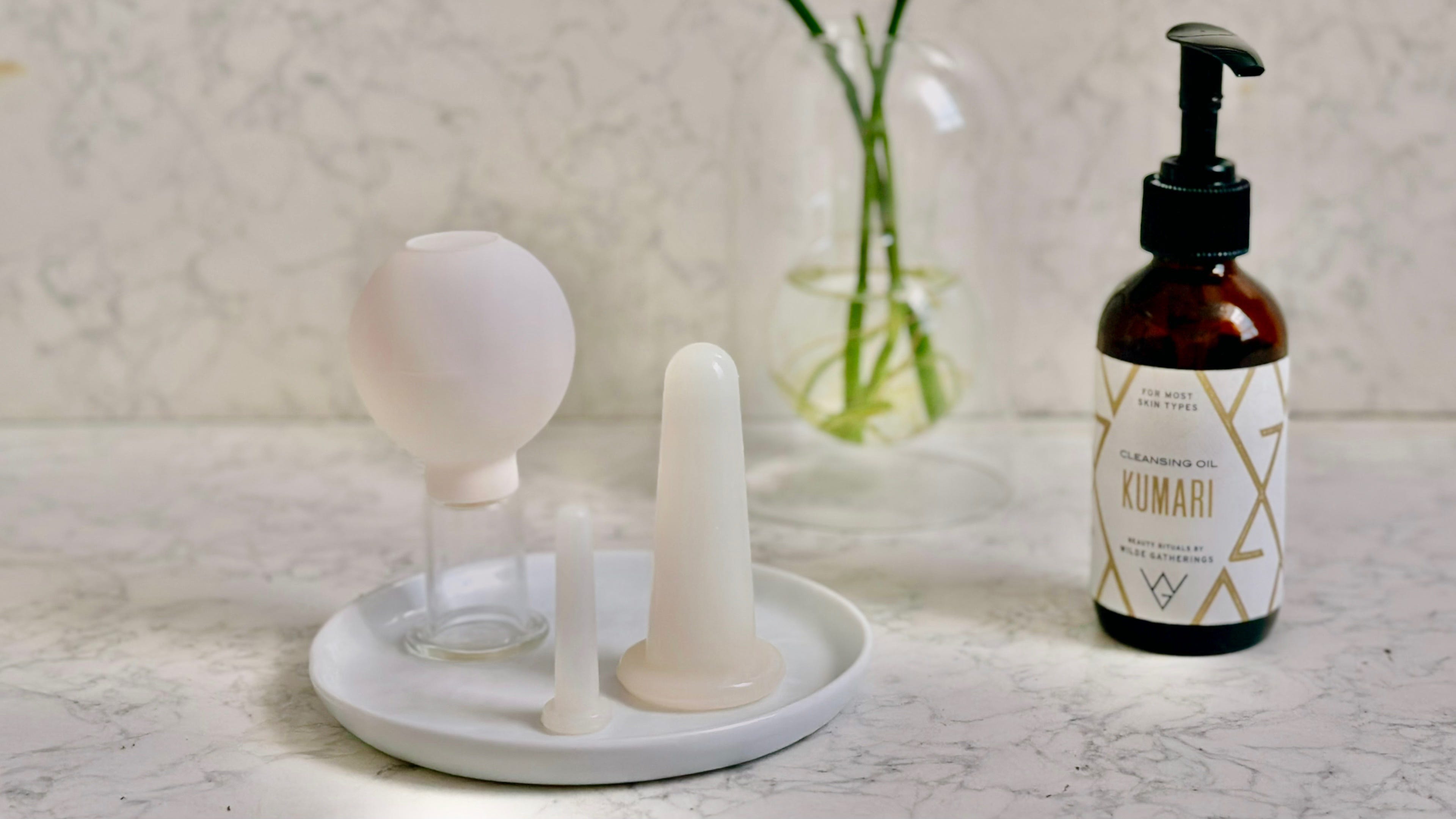
Facial Cups
Facial cups come in several forms, shapes, and sizes. The most common are glass cups with a suction bulb and all-silicone cups.
I find glass cups provide stronger suction and allow for a more precise treatment, but they require a gentle, careful approach. The skin needs to be held taut with one hand while the cup glides over the surface with the other. This helps control the suction and protect the delicate tissues of the face.
For the purpose of this training, we are working with silicone facial cups. I personally prefer silicone cups for home use because they are gentle, forgiving, and easy to use. The soft silicone is less harsh on the skin, and you can even use them while you’re doing something else - like watching TV.
Warming Oil Prep
Apply the oil to your face and décolletage. Facial cups need lubrication to help protect the delicate skin of the face and allow the cups to glide smoothly across the skin.
When applying the oil, you can also take the opportunity to gently stimulate the lymph nodes and encourage lymphatic flow. Watch this tutorial on lymphatic massage - it’s a great primer for facial cupping: Lymphatic Massage
Facial Cupping Tutorials
For a quick and easy cupping session, follow the tutorials below. You can repeat each movement 3, 6, or 9 times, depending on the area and how your skin responds.
Silicone Cup Techniques
There are two basic techniques for facial cupping:
Glide: Activate the suction and place the cup perpendicular to the surface of the skin. Hold the adjacent skin taut with one hand while gently gliding the cup across the skin with the other.
Kiss: Activate the suction and place the cup perpendicular to the skin. Gently lift the cup and then release the suction, creating a soft “kissing” sound. This technique is great for stimulating acupuncture points or areas that are highly contoured, such as the neck. It can also be used to create a temporary plumping effect, particularly on the lips.
Medium-Size Silicone Facial Cup Tutorial
The medium-size silicone facial cups are great for larger strokes, gently moving lymph and encouraging the circulation of Qi and blood to the face, neck, and décolletage.
Small-Size Silicone Facial Cup Tutorial
The smallest silicone cups are best for the delicate areas around the eyes and nose. They create much less suction, making them ideal for the thinner, more sensitive skin around the eyes. They are also great for gently activating acupuncture points near the eyes—especially Bladder 1, also known as “Bright Eyes,” located at the inner corner of the eye.
Facial Cupping - A Few Things to Keep in Mind
Always use a serum or oil with good slip. My favorites are an oil like Kumari from Wilde Gatherings or Immunocologie Face Serum, a mineral-rich oil with a lighter texture. Facial cupping may help increase the absorption of topical products, so make sure you are using high-quality ingredients on your skin.
Never let the cups rest in one location for more than a few seconds. Leaving a cup in one place for too long can cause petechiae to appear on the skin. Petechiae are tiny, flat red, purple, or brown spots caused by bleeding from small capillaries beneath the skin. In Chinese Medicine, bringing stagnation to the surface is traditionally viewed as part of the therapeutic action of cupping, allowing it to be more easily moved and cleared. Petechiae typically fade on their own within 2–3 days, but you may not want to walk around with a little circle on your face!
Use only the smallest facial cups around the eyes. The skin around the eyes is among the thinnest and most delicate on the body, making it especially susceptible to dryness and sensitivity. Use a very gentle touch and avoid strong suction in this area.
Think up, out, and down. Generally, you want to encourage a lifting movement through the muscles, so use upward and outward strokes. To encourage lymphatic flow, guide the movement toward the ears and then down the sides of the neck. For example, move from the chin toward the earlobes, then continue down the neck.
If using glass facial cups, be sure to hold the skin taut with one hand while the cup glides over the surface with the other. This helps control the suction and protect the delicate tissues of the face.
Facial cupping should always feel gentle and comfortable. Facial skin and the tissues underneath are delicate, so use light suction and keep the cups moving. When in doubt, less suction is always better.
Avoid facial cupping over active inflammation, open skin, cuts, bruises, sunburn, or areas of irritation. Use extra care around the eyes and other delicate areas, and discontinue if you experience pain, significant redness, swelling, or irritation.
If you have a skin condition, recent facial treatment, or any medical concern that may affect your skin or circulation, check with your healthcare provider before practicing facial cupping at home.
Making Facial Cupping a Regular Ritual
You can use Facial Cupping 2–3 times per week for a short period when first introducing it, as long as your skin tolerates it well. For professional facial cupping, every 1–2 weeks is a reasonable cadence, depending on your skin, sensitivity, and goals.
I love using facial cups before special events. I feel like the lifting effect on the muscles of my face gives my skin a softer appearance, and my fine lines look like they’ve been touched up with a magic eraser. With regular treatments, these effects may become more noticeable over time.
And please remember, gentle and consistent in facial cupping, is better than frequent or aggressive. Facial cupping is a wellness and beauty ritual, not a medical treatment. When in doubt, less suction is always better.
Take a few minutes for yourself, breathe, and enjoy the ritual!


